Thursday, June 28, 2012


Is a big stone always meaning "beautiful"?

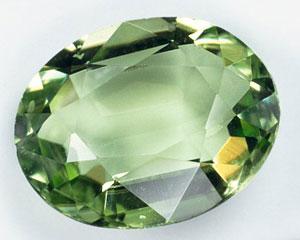
Finally, the size of your gem is also very important when you evaluating it. Big crystals are rare, therefore, expensive. Nobody will stay indifferent when imagines a big diamond in her wedding ring. Also, normally very pale stones (such as aquamarine) get more pronounced and deep color when they are bigger. This is why the price per carat is higher for the bigger gems.

However, there are exceptions from this "size rule". If a precious stone has a very dark color, then the bigger it is, the darker the color is. For example, a dark-green tourmaline or a dark-blue sapphire will appear almost black. Therefore, the price per carat for such stones is not going to be great.

It is very important that the colored stones have a cut, that is the best for their size, so the color is shown the best.

I hope, that this article helped you to look at your favorite gem from a new point of view. Use this knowledge (if it is new for you) to wisely choose a piece of jewelry with a stone for your dear people and friends.
http://www.beadsky.com

How much does fashion and rareness of a stone influence its price?

So, what else can make your stone attractive? Often we are intrigued by anything that is not that beautiful or useful, but because it is rare. Especially if we speak of rare gems.

Synthetic emerald or ruby has the same chemical and physical characteristics as that of a natural stone. Its color and clarity is much better than those of the most of the natural stones. Nevertheless, any perfect synthetic stone is much cheaper than imperfect ingenious gem, because we can get as many of synthetics in a lab as we like.

The thought that the Mother Nature needed centuries to create your natural stone (and an accident brought it to you) influences the wish to have it and therefore the price goes up.

Is your stone one of a kind? If not, maybe you have any dear memories that you recall every time you look at it? Is it given to you by a dear person? All this is very individual, but influences the real price. This is why a piece of jewelry preowned by a famous person (or made by a famous jeweler) costs more, than a visually equal piece of jewelry that does not have a history behind it.

What else influences the price of a gem? Fashion. Though, this is a temporary variable in the price. Whatever has been in fashion yesterday is going to be forgotten tomorrow. Only few gems are practically not touched by the fashion dictate. You can guess, that they are diamonds, rubies, sapphires and emeralds.

Some time ago pearls were rare enough to be beyond fashion. Now the pearls are cultivated and became an "ordinary" gem.

Here is another sample of how fashion influences the price. Opaque black crystals of carbonado were used for rock drills, saws and other industrial purposes, until... somebody has made them fashionable. So, now it is being put into the most expensive pieces of jewelry together with the timeless gems.

One little note. You probably have your own style. Do you choose your gems so they go with your style and not just the stones that are in fashion? Remember, that your jewelry should go with your style and the places you wear them to. The proper use of your jewelry adds to its attraction and therefore the price.

Another important characteristic of a precious gem stone is durability. How hard and how tough is your stone? Often people think that these words are the same characteristic of durability of a stone. It is wrong.

For example, diamond is the hardest stone on the Earth. Though, it can cleave. Opposite, jade can be easily scratched, but you cannot split it.

By the way, all the minerals can be ranged in an order by their hardness. The Austrian mineralogist Friedrich Mohs has created the scale of hardness. He selected 10 common and easily obtained minerals, with quite distinctive hardness, as the comparison minerals. The harder a mineral is, the higher number it has in the scale. A harder mineral can scratch a softer mineral.


1- Talc (can be crushed with a finger nail)
2- Gypsum (can be scratched with a finger nail)
3- Calcite (can be scratched with a copper coin)
4- Fluorite (can be easily scratched with a knife)
5- Apatite (can be scratched with a knife)
6- Orthoclase feldspar (can be scratched with a file)
7- Quartz (can scratch glass)
8- Topaz
9- Corundum
10- Diamond

This is only an order of hardness, but the scale does not show how much one mineral is harder than another. Nevertheless, it is very useful to know about the hardness of your stone.

It is considered that only the gem stones with the hardness 7 or higher can be called precious, because they are durable. You might think that this is not the rule anymore in our century of plastic and other jewelry made of disposable materials for one season fashion. Nevertheless, the hardness keeps influencing the prices of the gems. Therefore, the amethyst (with its hardness 7, as it is quartz) is going always be more expensive than the violet fluorite that looks practically the same (except its hardness is 4).

Consider the hardness when you are trying to keep your gem stone jewelry in a perfect condition. Put the jewelry pieces with the gems of different hardness into the separate boxes or the harder gems will scratch the softer stones.
http://www.beadsky.com

Beauty is another characteristic that affects the gem's price. You can see, that your favorite gem is beautiful. How can you describe this to others?

Beauty is color, whether it is invigorating and warm color of a ruby or mysterious color of an emerald. Shape and cut is of a big significance too. They can show the beauty of the stone or kill it.

Only a professional gemologist can see if there is an interesting optical effect in the rough gem and choose the cut, that should be individual. Transparent stones mostly have faceted cuts, but if there is a "star" or a "cat's eye" effect then the stone must be cut as a cabochon.

How really beautiful is you're stone? You need to know what to look at, so look at its lustre, brilliance and "fire".

Lustre is an optical effect produced by the light reflected from the surface of a mineral. Rays of light partially pass through the stone and are partially reflected. So, the brilliance depends on the internal nature of the stone on one hand and on the surface and the quality of its polish on another hand.

Look closely at your stone. How well is it polished? The surface should be smooth and shiny. If it is, you will be able to see the most brilliance and lustre that your stone can show.

Most transparent and translucent gems have brilliant (adamantine) and glass (vitreous) lustre. What lustre does your stone have? Does it have the same lustre as glass or is it much brighter, like a diamond?

Vitreous lustre is a characteristic of a quartz, sapphire or topaz. Adamantine lustre is a characteristic of a diamond, zircon and demantoid (green garnet). 
Resinous lustre is a lustre like that of a resin (examples: some garnets and amber). Pearls and moonstone has pearly lustre. Satin-spar has silky lustre.

If there is "fire" in a stone it adds it more beauty. Move your stone under the light. Do you see the sparkles of rainbow? Fire is especially important for the colorless stones. Usually the gems judged by the combination of lustre and fire. A cut is chosen individually for each gem in order to enhance them. The most brilliant stones that have the best combination of both are diamonds, zircons, garnets almandine, rubies, sapphires, spinels and topazes.
http://www.beadsky.com

There are many classifications of gem stones and minerals, because there too many different opinions on what is what. The definition of a "precious stone" is not objective. It often depends on fashion, demand and portability (note, that demand could depend on anything including the magic qualities of the gem). After reading this article you will be able to get your own opinion on the subject.

English mineralogist of the beginning of the 20th century G.Smith stated, that there were 3 the most important qualities of the gem stone: beauty, durability and rarity. Only diamond, ruby, emerald, blue sapphire, pearl, opal and alexandrite could be called the precious stones in that case. Some countries classify other transparent gems that usually have faceted cut as semi-precious as they do not have all 3 qualities at the same time. Other countries use the term "gem" regardless, because stones that were called "semi- precious" before are sold for more than a fine diamond now.

You probably have your favorite piece of jewelry with a gem. Take it and look at it. Let's see together what makes this gem so attractive?

First of all we notice its color. The magic powers thought to depend on the gems' colors. The color makes the gem attractive, but... is it what we see? All people have their own color perception. It is not easy to describe the exact tint. The light can change our color perception too.

What time of day do you wear your gem? Most people prefer wearing them in the evening. Do you know how electric light affects your perception of the gems? Dark red, blue and purple stones loose their beauty. Orange, yellow and yellow-green stones look better. Day light is the best when you need to see the real colors and gem's qualities.

Now, we are moving to the "qualities". Many stones have flaws and defects either natural or manufacturing. Natural flaws are cracks and inclusions that often are other crystals, minerals, gases or liquids.

They do reduce the price of a gem, but do not devaluate. It is extremely difficult to find a colored precious gem stone with no flaws (if your last name is not Rockefeller). The flaws can add an interesting look to a gem and tell of its place of origin. There is a very good chance that a gem with no flaws is an imitation.

Manufacturing flaws are different. It could be wrong proportions of a cut, external fractures, poor polishing. All these flaws devaluate the gems. Be picky when you are choosing your gem, do not let the stones that have any of these flaws into your collection.
http://www.beadsky.com

Precious and Semi Precious Gemstones: Myth and Reality


The idea that some gemstones are precious and others are only semi-precious is familiar to every buyer of colored stones. Precious stones -- diamond, ruby, sapphire and emerald -- traditionally command a premium price in the market due to their extraordinary color or brilliance and extreme rarity.

While the precious stones are deservedly famous, the conventional distinction between precious and semi-precious gems is laden with myth and misconceptions. Lets try to sort out some of the myths from the reality.

One common misconception is that the distinction between precious and semi-precious gemstones is traditional, going back many centuries. In fact it is a recent innovation, dating only to the nineteenth century. The first use of semiprecious to mean "of less commercial value than a precious stone" can be traced back only to 1858.

Another misconception is that the list of four precious gems has a long history. In fact the traditional list of precious gemstones is rather longer and includes some surprising members. Pearl, though not strictly speaking a gemstone, was considered to be precious; so was opal. But one of the most traditional precious stones with a history going back to ancient Greece was amethyst. Amethyst was reclassified as semi-precious after large deposits were found in Brazil and Uruguay in the first half of the nineteenth century. The introduction of the term semiprecious into the English lexicon corresponds to the new amethyst discoveries.

Of all the precious stones, diamond is the most subject to myth. But it is interesting that the myths are of modern rather than ancient origin. Historically, colored gemstones such as ruby and sapphire were more highly valued than diamond, mainly because diamond was not particularly rare. But the twentieth century saw a major change. The first thing that happened is that very large finds in South Africa created an even more abundant supply of gem quality diamond. At the same time, the perceived value of diamond has risen to the point where it's fair to say that diamond is at the top of the list of the precious stones in the mind of the buying public. What happened? Aren't precious gems valued especially for their rarity?

In the 19th century, world production of diamond was only a few pounds a year. After the discovery of the huge South African diamond mines in 1870, diamonds were being dug out of the ground literally by the ton. There was such a glut of supply and so little demand that the British financiers of the South African mines were in danger of losing their investment. Their solution was to create the powerful De Beers cartel that to this day controls worldwide diamond production and supply. Quality diamonds are actually not scarce at all. But De Beers controls how much supply comes on the market and that keeps prices high.

The De Beers consortium also mounted a concerted decades-long advertising campaign to associate diamonds with love, courtship and marriage, under the now familiar slogan "Diamonds are Forever." The diamond engagement ring, once unknown in most parts of the world (including Europe), is now considered an essential part of the ritual of marriage. It is hard to avoid the conclusion that diamond's special position as a precious stone is due largely to monopoly economics and social engineering.

These days a number of rare "semi-precious" stones such as alexandrite, demantoid garnet, tsavorite garnet and tanzanite can just as expensive as ruby and sapphire. Very fine tourmaline, spinel and aquamarine in larger sizes also command very high prices in the market.It is fair to say that we have now reached the point where the distinction between precious and semi-precious gemstones has become meaningless. The US Federal Trade Commission periodically considers banning the use of the terms altogether to reduce consumer confusion. The American Gem Trade Association (AGTA) has already added the following language to their Code of Ethics: "Members should avoid the use of the term 'semi-precious' in describing gemstones.
http://www.gemselect.com