Friday, June 29, 2012

Top 10 Rarest Gems


Gems are one of nature’s ways of saying, “look how beautiful I can be”, and people know it, too. For thousands of years humans have been adorning themselves with gems and jewels to stand out and wow an audience. Be it necklaces, brooches, pendants, or bracelets, precious and rare gems have long since become one of the favored ways to express just how much wealth one has. Here are the ten rarest 

Jeremejevite
USD $2000/Carat

Pronounced ye-REM-ay-ev-ite, this is a colorless, sky blue or pale yellow stone, the highest quality of which comes from Namibia. In nature it occurs in small obelisk-shaped crystals and has in the past been mistaken for aquamarine. It was named after Russian mineralogist Pavel Jeremejev who discovered the mineral in 1883. As of early 2005, a clean, 2.93-carat faceted gem was selling on the Internet for $2000.00 per carat.


Black Opal
USD $2,355/Carat

Australia is the classical Opal country and today is the worldwide most important supplier of Fine Opals. Almost 95 per cent of all Opals come from Australian mines. The remaining five per cent are mined in Mexico, and in Brazil’s north, also in the US states of Idaho and Nevada, but recently the stones have also been found in Ethiopia and in the West African country of Mali. Black Opal or Opal with a dark gray body shows the most brilliant play of colors imaginable.


Red Beryl Emerald
USD $10,000.00/Carat

Red beryl is found primarily in the Thomas Range and the Wah Wah Mountains of Utah, and has also been reportedly found in a location in Mexico (possibly near San Luis Potosi one of the very few places beryl is also found on rhyolite). Where it is found in Utah it occurs on rhyolite, where it crystallized under low pressure and high temperature, along fractures or cavities and porous areas of volcanic rhyolitic magma. Very few cut specimens exist.


Musgravite
USD $35,000/Carat

Musgravite is one of the newest and most rare gemstones in the world. Musgravite is a silicate mineral whose main ingredients are beryllium (Be), magnesium (Mg) and aluminum (Al). It was named ‘musgravite’ after the area Musgrave in Australia from where the material was first found. The musgravite was later found also in Greenland and Madagascar, but neither of them produces gem quality material. Two pieces of faceted gem-quality musgravite from Sri Lanka were reported first in 1993. Keep in mind, this is the LEAST priceless of the ten.


Grandidierite
USD $50,000/.5 Carat

This is a bluish green mineral found primarily in Madagascar. The first and so far only clean faceted specimen, from Sri Lanka, was originally mistaken for a serendibite and subsequently purchased in May 2000 by Prof. Gübelin from Murray Burford. The gem shown above weighs 0.29 carats. Grandidierite is trichroic, transmitting blue, green and white light. The mineral is named after French explorer and natural historian Alfred Grandidier, who among other things unearthed bones from the extinct half-ton elephant bird in Ambolisatra, Madagascar.


Painite
USD $50-60,000/Carat

This gem was once believed to be the rarest mineral on earth, is today still considered very rare. British mineralogist 1950s first discovered it in Myanmar. When it was confirmed as a new mineral species, it was named after him: Arthur C.D. Pain. For many years, only three small painite crystals were known to exist. Before 2005 there were less than 25 known crystals found, though more material has been unearthed recently in Myanmar.


Blue Garnet
USD $1.5 Million/Carat

Garnets species are found in many colors including red, orange, yellow, green, blue, purple, brown, black, pink and colorless. The rarest of these is the blue garnet, discovered in the late 1990s in Bekily, Madagascar. It is also found in parts of the United States, Russia and Turkey. It changes color from blue-green in the daylight to purple in incandescent light, as a result of the relatively high amounts of vanadium. The most expensive, a 4.2 carat gem sold in 2003 for $6.8 Million.


Serendibite
USD $1.8-2 Million/Carat

This gem is a cyan colored stone that comes from Sri Lanka. It boasts an unusually complex formula consisting of calcium, magnesium, aluminum, silicon, boron and oxygen. So far there exist only three faceted (cut) specimens of 0.35 carats, 0.55 carats and 0.56 carats. The first two were discovered by rare stone specialist D. P. Gunasekera and purchased by the late Prof. E. J. Gübelin of Switzerland. The smallest was sold for about $14,300.00 per carat.


Red Diamonds
USD $2-2.5 Million/Carat

Only a very few red diamonds are ever found, and few people have only seen even one treated red diamond. The gem is described as a purplish red, so it is not a pure red, crimson, vermilion, or scarlet. Nevertheless for its size it is one of the most expensive diamonds ever. The Argyle Mine in Australia produces a small number of red diamonds. The largest and finest of these are auctioned every year or two, and sell for millions of dollars.


Jadeite
USD $3 + Million/Carat

Until recent years jadeite has been something of a mystery mineral, but we now know of primary sources in Guatemala as well as several California occurrences of white or grayish jadeite. Boulders in which a few small freestanding crystals have been seen occur in San Benito Co., California, with additional finds in Clear Creek, between New Idria and Hernandez. All Mexican jadeite is in artifacts, from unknown sources. The record price for a single piece of jadeite jewelry was set at the November 1997 Christie’s Hong Kong sale: Lot 1843, the “Doubly Fortunate” necklace of 27 approximately .5 mm jadeite beads sold for US$9.3 million
http://listverse.com




World famous jewels 2


Elizabeth Taylor attends a charity ball in Monaco, South of France on Nov. 17, 1969. Making its debut is the famous 69.42 carat, pear-shaped diamond that Taylor is wearing as a pendant. It is a present from her husband, Richard Burton. Initially, the diamond was bought by Paris jeweler Cartier at an auction and he named it "Cartier." Burton bought it the next day and renamed it "Taylor-Burton." (AP Photo/Maestri)


ADDS DATE OF SALE - FILE - This , Sept. 1, 2011, file photo shows"The Elizabeth Taylor Diamond," a 33.19 carat a gift to the actress from Richard Burton at Christie's, in New York. The 33.19-carat diamond ring given to Elizabeth Taylor by actor Richard Burton sold for over $8.8 million at auction in New York Tuesday Dec. 13, 2011. (AP Photo/Richard Drew, File)


An employee of Sotheby's auction house holding a 24.78 carat fancy intense pink diamond mounted as a ring, that was last seen on the market some 60 years ago according to the house, ahead of an upcoming auction in central London, Monday Oct. 25, 2010. The rare emerald-cut pink diamond is estimated to fetch some 27-38 million US dollars when it is auctioned in Geveva, Switzerland on Nov. 16, 2010 part of the house's 'Magnificent Jewels Sale'


FILE - In this Nov. 16, 2010 file photo, Britain's Prince William and his fiancee Kate Middleton pose for the media at St. James's Palace in London, after they announced their engagement. Few people seem the least bit concerned that Prince William and Kate Middleton, set for the royal wedding on April 29, have been living together off and on since their university days.


Kim Kardashian's $2 Million, 20-Carat Diamond Ring


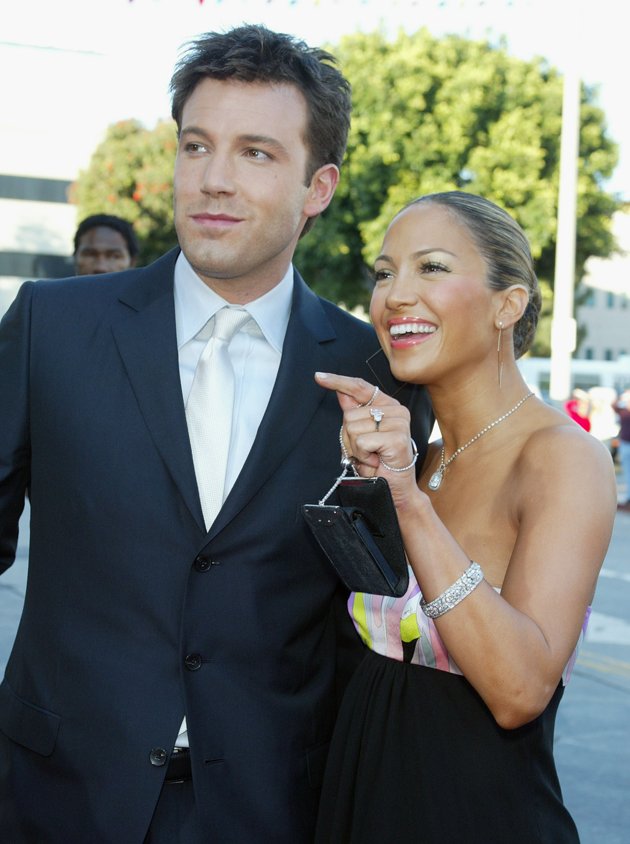
Jennifer Lopez's pink diamond engagement from ex Ben Affleck. Pictured: Actor Ben Affleck (L) and his fiance actress/singer Jennifer Lopez arrive at the premiere of "Daredevil" at the Village Theatre on February 9, 2003 in Los Angeles, California. (Photo by Kevin Winter/Getty Images)
http://news.yahoo.com

World famous jewels


'Martian Pink' diamond fetches $17m in Hong Kong


Exhibition curator Caroline de Guitaut poses with Queen Victoria's Small Diamond Crown at the Queen's Gallery in Buckingham Palace, London May 15, 2012. A special exhibition "Diamonds: A Jubilee Celebration" will run from June 30 - July 8 and July 31 - October 7, in celebration of Queen Elizabeth's Diamond Jubilee anniversary. REUTERS/Stefan Wermuth


Exhibition curator Caroline de Guitaut poses with the Cullinan VII necklace at the Queen's Gallery in Buckingham Palace, London May 15, 2012. A special exhibition "Diamonds: A Jubilee Celebration" will run from June 30 - July 8 and July 31 - October 7, in celebration of Queen Elizabeth's Diamond Jubilee anniversary. REUTERS/Stefan Wermuth


In this May 2, 2012 file photo an employee shows the Beau Sancy diamond, 34.98 carat, at Sotheby's auction house in Zurich, Switzerland. Marie de Medici wore it at her coronation as Queen Consort of Henry IV in 1610, and now the Beau Sancy diamond is a lavish accessory owned by an anonymous bidder who paid US $9.7 million (7.6 million euro) for it at Sotheby’s auction in Geneva Tuesday May 15, 2012. The spring auction season for jewelry and watches is upon Geneva, where elegant lakefront hotels fill with well-heeled buyers and bidders in a scene far removed from the debate over European austerity. (AP Photo / Keystone, Alessandro Della Bella, File)


World’s first all-diamond, 150-carat ring created by Swiss jeweler Shawish Jewelry. (shawish-jewellery.com)


Beyonce's 18-carat engagment ring from Jay-Z. Pictured: Beyonce watches Rafael Nadal of Spain and Novak Djokovic of Serbia play during the Men's Final on Day Fifteen of the 2011 US Open at the USTA Billie Jean King National Tennis Center on September 12, 2011 in the Flushing neighborhood of the Queens borough of New York City. (Photo by Clive Brunskill/Getty Images)
http://news.yahoo.com/


The history and legends of the emerald

Some interesting, yet unscientific attributes have been credited to emeralds from the Ancient Greeks:
They considered it able to reveal faithfulness among lovers and  dedicated it to the Goddess Venus.
The Romans considered it soothing as Nero would " refresh and restore his vision" watching battles through the cool clarity of fine emerald glasses. (GIA)
In the ancient days, emeralds were confused with other stones such as jasper, green sapphire, smithsonite and others, as if each was a different phase of metamorphosis towards the most prized: the Emerald.

Since the time of ancient legends, the more recent history begins in South America in 1568 when the Spanish Conquistadors formally began mining emeralds at the Muzo mine, still the world's largest known deposit. It took many years for the Conquistadors to try and force the subjagated Incas to reveal the location of the hidden tunnels of which even the paths had been overgrown by the jungle. Finally the Spanish, almost by accident, found them on their own and began mining and producing for the Spanish crown, who claimed one-fifth. The rarity of emeralds has been evidenced by the struggle to find them, which has been the main factor in its high value over the centuries.

From the 1940's, the Government of Colombia took over the emerald mines due to high incidences of violence. Then in 1970, the government privatized Muzo and Coscuez to be operated by Joint Ventures between its own agency, Mineralco, and private companies such as Esmeracol in Coscuez, Tecminas Lrda in Quipma, and Coexminas Ltda in Muzo.

From 1986 to 1990, Mineralco attempted to initiate a policy to "explore and produce emerald deposits in a more traditional manner." (Mineralco) During this time, other smaller deposits were found in and among the triangle formed by the other three big deposits. Mining contracts for exploration and production were granted for 25 years.

As in diamonds, the few famous large emeralds, scattered around the world, are often known by their names. The two most famous are the Devonshire Emerald and the Patricia Emerald. The Devonshire Emerald was given to the sixth Duke of Devonshire by Emperor Dom Pedro I of Brazil in 1831. Uncut, it weighs 1,385.95 carats. The Patricia Emerald, located in the American Museum of Natural History in New York, weighs 630 carats. Five unnamed large emerald crystals from Muzo are located in the vault of the Bank of the Republic of Colombia and they weigh between 1,100 carats to 1,796 carats, as well as one weighing 220 carats. A Russian emerald in the Los Angelos Museum of Natural History weighs 1,965 carats. The Smithsonian Institute in Washington has some notable, fine quality emeralds, one of them an 858 carat crystal considered to be the finest quality in existence. There are also some notable emeralds in the Smithsonian from discoveries in North Carolina in the 1960's and 1970's. (GIA)

The largest collection of emeralds is said to be the crown jewels of Iran with pieces mounted in a belt, the Pahlabi Crown,  necklaces and even the Nadir Throne itself with between 1500-2000 carats of emeralds.  The Crown of the Andes is probably the most famous single piece of emerald  jewelry with 453 stones (1,521 cts.) including the Atahualpa Emerald (45 cts.) named after one of the last Inca emperors. The Crown, Fashioned from a solid block of pure gold, was made in 1593 for the Madonna statue in Popayan, Colombia.  Briefly captured by English pirates in 1650 it was recovered and became a prize of revolutionary war for independence from Spain waged by Simon Bolivar in 1812.  Its present location is unknown.
http://emeraldstone.com

Pearl : Stone for Moon

In the Astrological works the moon is considered as signification of heart (man) and thus wearing a Pearl brings one out of depressions and gives a calm and vibrant feeling.  
The memory is also improved and the general interaction with other people is more fruitful. It can cure all diseases arising out of heart.  
The orange cosmic rays emitted by the Pearl helps in splitting and exploding the negative energy in the body. It helps in cleaning and decongesting the negative emotions and negative energy particles in the Aura. 
It gives a clear complexion and if used as a powder on the face gives unique flow. This is a secret of Ayurveda known to few and used by even fewer people.
http://www.liveindia.com

Blue Sapphire : Stone for Saturn  ( Neelam )

Blue sapphire is the most talked about gem. It gives status and influence in the society . Most of the famous people wear this gem to achieve great benefits in life. It gives rare ideas a! ! nd skills and enhances the innovative power of mind , said to fight depression and gives serenity to the mind. Must for people in the creative field and those who desire fame .

White Sapphire (Saffed Pukhraj) 

This gem of Venus ,it gives one glamour and radiance which makes one stand apart from the crowd .It improves sex appeal , improves the innovative powers and megha shakti , worn by people who want to stand apart and be remebered like actors, models ,players etc. People in public relations can also benefit a lot from it.